
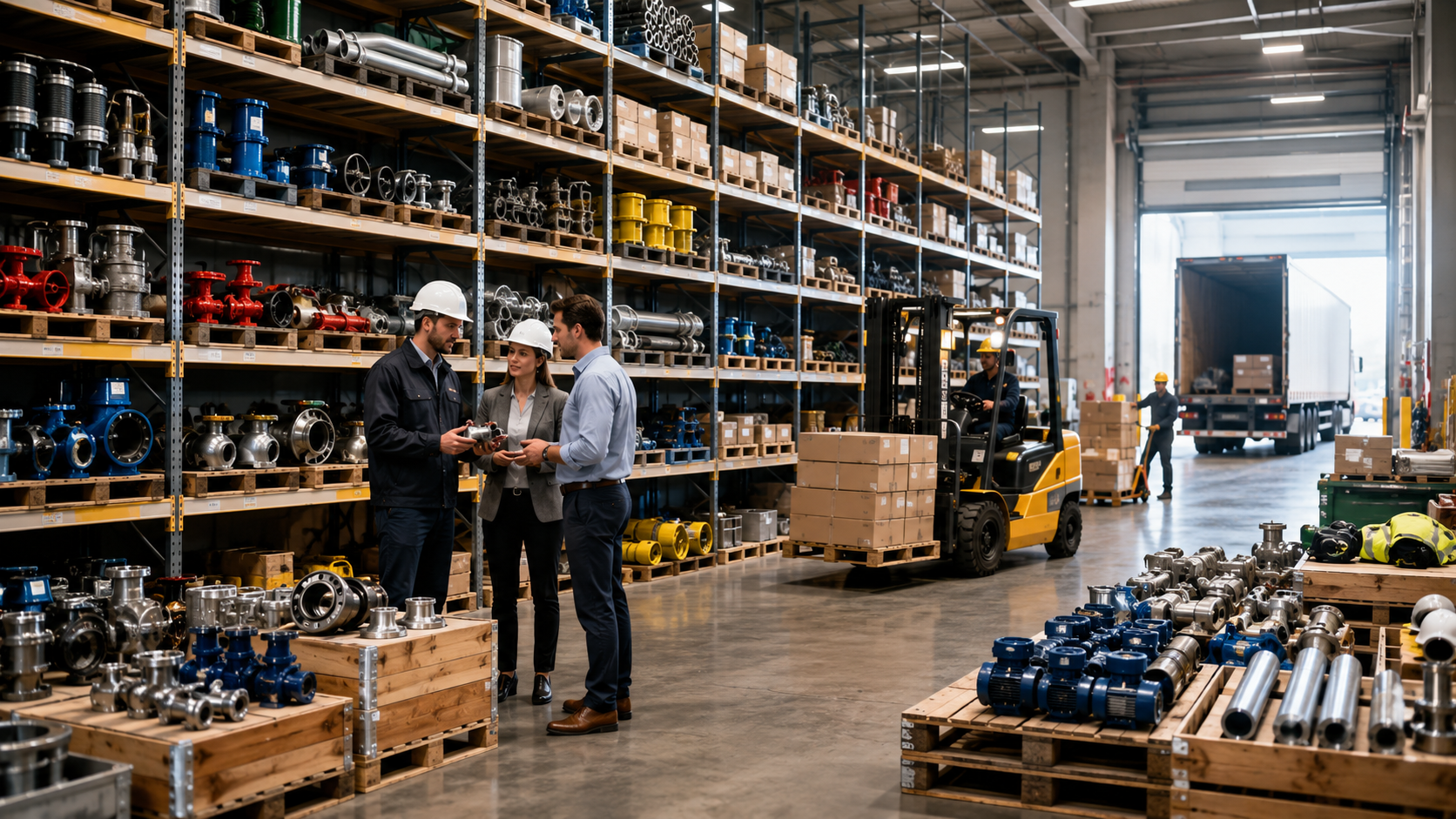
Full-service industrial distributor is a key term for companies that need more than a simple supplier of parts, tools, and consumables. It refers to an industrial partner that provides products, technical support, sourcing, logistics, inventory solutions, and procurement assistance in one integrated service model.
For manufacturers, maintenance teams, contractors, warehouses, plants, and facility managers, choosing the right distributor can directly affect uptime, cost control, safety, and operational continuity. A full-service provider helps businesses avoid production delays, reduce fragmented purchasing, improve stock availability, and simplify the management of industrial supplies.
In this guide, you will learn what a full-service industrial distributor does, how it works, what benefits it offers, when it is the right choice, what mistakes to avoid, and how to evaluate one before building a long-term supplier relationship.
What is a full-service industrial distributor?
A full-service industrial distributor is a company that supplies industrial products while also offering added services that support procurement, maintenance, inventory management, technical selection, delivery, and operational efficiency.
Unlike a basic vendor that only sells products, a full-service distributor acts as a strategic supply partner. Its role is not limited to taking orders. It helps customers identify the right materials, locate hard-to-find parts, manage recurring supply needs, streamline purchasing, and reduce operational risk.
This type of distributor commonly serves industries such as:
- Manufacturing
- Food and beverage processing
- Automotive
- Aerospace
- Oil and gas
- Energy
- Construction
- Mining
- Warehousing and logistics
- Metalworking
- Packaging
- Maintenance and facility operations
A full-service industrial distributor may supply products such as safety equipment, abrasives, fasteners, bearings, cutting tools, adhesives, electrical components, janitorial supplies, lubricants, personal protective equipment, MRO products, and general industrial supplies.
More below, you will see how this model works in real operations and why many companies prefer it over managing dozens of separate vendors.
What does a full-service industrial distributor provide?
A full-service industrial distributor usually provides a broad combination of products, services, and operational support. The exact offering depends on the company, but the most valuable distributors typically cover several key areas.
Industrial product supply
The foundation of any industrial distributor is product availability. Companies rely on distributors to obtain the materials needed for daily operations, preventive maintenance, repairs, production support, and workplace safety.
Common product categories include:
- MRO supplies
- PPE and safety products
- Hand tools and power tools
- Abrasives and cutting tools
- Fasteners and hardware
- Bearings and power transmission components
- Electrical and automation supplies
- Hydraulic and pneumatic products
- Adhesives, sealants, and tapes
- Lubricants and chemicals
- Welding supplies
- Packaging materials
- Facility maintenance products
- Cleaning and janitorial supplies
A full-service industrial distributor often offers both standard items and specialized products for specific applications.
Technical product support
Industrial purchasing is not always simple. Choosing the wrong part, tool, lubricant, fastener, or safety product can create downtime, waste, safety issues, or premature equipment failure.
A full-service distributor can help with:
- Product selection
- Specification review
- Cross-referencing replacement parts
- Application recommendations
- Compatibility checks
- Alternative product suggestions
- Brand comparisons
- Safety and compliance considerations
This support is especially valuable when maintenance teams need to replace obsolete parts, find equivalents, or solve recurring performance problems.
Procurement and sourcing support
Many industrial buyers spend too much time searching for products, comparing vendors, checking availability, and managing purchase orders. A full-service distributor simplifies this process by centralizing sourcing and procurement support.
This may include:
- Locating hard-to-find products
- Consolidating multiple supply categories
- Managing repeat orders
- Supporting emergency purchases
- Offering customized quotes
- Helping standardize product lists
- Reducing vendor complexity
For purchasing departments, this can reduce administrative workload and make procurement more predictable.
Inventory management solutions
Inventory is one of the most important areas where a full-service industrial distributor can create value. Too much inventory ties up money and warehouse space. Too little inventory causes downtime, urgent purchases, and production interruptions.
A distributor may help with:
- Stock level recommendations
- Vendor-managed inventory
- Bin stocking
- Replenishment programs
- Consignment inventory
- Kanban systems
- Usage tracking
- Critical spare parts planning
In the section on mistakes, you will see why poor inventory planning is one of the most expensive problems in industrial supply management.
Logistics and delivery
Fast and reliable delivery is essential in industrial operations. A missing component can stop a production line, delay a repair, or affect a customer delivery.
A full-service industrial distributor may provide:
- Scheduled deliveries
- Same-day or next-day delivery where available
- Emergency delivery support
- Local warehouse access
- Direct-to-site delivery
- Multi-location shipping
- Order tracking
- Consolidated shipments
The goal is to make product availability more dependable and reduce the risk of operational disruption.
Cost control and supply chain efficiency
A good distributor does not only sell products. It helps the customer control total cost. This includes more than unit price.
A full-service distributor may help reduce costs by:
- Consolidating suppliers
- Reducing emergency purchases
- Improving product standardization
- Lowering inventory carrying costs
- Reducing downtime
- Minimizing incorrect purchases
- Improving order accuracy
- Identifying better product alternatives
In industrial purchasing, the cheapest item is not always the lowest-cost option. A slightly higher-quality product may last longer, reduce labor time, improve safety, or prevent equipment failure.
Why companies use a full-service industrial distributor
Businesses use a full-service industrial distributor because industrial supply management can become complex very quickly. A plant, warehouse, or maintenance department may depend on thousands of items across different categories.
Without a reliable distribution partner, teams often face problems such as:
- Too many suppliers
- Slow purchasing cycles
- Stockouts
- Duplicate products
- Inconsistent product quality
- Lack of technical support
- Emergency orders
- Poor visibility into spending
- Uncontrolled inventory
- Downtime caused by missing parts
A full-service distributor helps simplify this complexity by becoming a single point of support for many operational needs.
Key benefits of working with a full-service industrial distributor
Reduced downtime
Downtime is one of the most expensive risks in industrial environments. A stopped production line, disabled machine, or delayed repair can affect revenue, labor productivity, customer commitments, and safety.
A full-service industrial distributor helps reduce downtime by improving access to critical products, supporting emergency sourcing, and helping customers maintain essential inventory.
For example, if a maintenance team needs a replacement bearing, belt, adhesive, or safety item, a reliable distributor can help locate it faster than a general supplier with limited industrial expertise.
Simplified purchasing
Many companies buy from too many vendors. This creates administrative work, fragmented invoices, inconsistent terms, and unnecessary complexity.
A full-service distributor can consolidate multiple product categories under one purchasing relationship. This makes it easier to manage quotes, orders, invoices, approvals, and supplier performance.
For procurement teams, this can mean fewer purchase orders, fewer vendor records, and better control over spending.
Better product selection
Industrial products are application-specific. The wrong product may fit physically but fail under real operating conditions.
A full-service distributor can help customers choose products based on:
- Load requirements
- Temperature
- Chemical exposure
- Safety standards
- Durability
- Equipment compatibility
- Usage frequency
- Environmental conditions
- Maintenance requirements
This reduces the risk of buying products that look correct on paper but fail in practice.
Improved inventory control
Inventory problems usually appear in two forms: too much stock or not enough stock.
Too much inventory creates unnecessary cost. Not enough inventory creates operational risk. A full-service industrial distributor can help balance both sides by reviewing usage patterns, identifying critical items, and setting better replenishment processes.
This is especially useful for MRO supplies, safety products, fasteners, consumables, and spare parts.
Access to broader product categories
A full-service industrial distributor usually has access to a wide network of manufacturers and suppliers. This makes it easier for customers to source many types of industrial products from one partner.
Instead of contacting several specialized vendors, the buyer can rely on one distributor to locate, quote, and deliver the required materials.
Support for multiple locations
Companies with more than one facility often struggle with inconsistent purchasing practices. One plant may use different brands, part numbers, suppliers, and inventory processes than another.
A full-service distributor can help standardize supply across locations. This improves consistency, reporting, training, and cost control.
Stronger supplier relationships
A long-term relationship with a distributor can lead to better service, faster response times, better understanding of operational needs, and more proactive support.
Over time, the distributor learns:
- The customer’s equipment
- Common product requirements
- Preferred brands
- Critical parts
- Delivery schedules
- Budget priorities
- Safety requirements
- Maintenance routines
This knowledge allows the distributor to serve the customer more effectively.
How a full-service industrial distributor works
A full-service industrial distributor usually follows a process that goes beyond order fulfillment.
Needs assessment
The relationship often begins with understanding the customer’s operation. This may include reviewing product categories, purchasing patterns, inventory problems, maintenance needs, safety requirements, and delivery expectations.
The distributor may ask questions such as:
- What products are used most frequently?
- Which items are critical for uptime?
- Which products are difficult to source?
- How many suppliers are currently involved?
- Are stockouts common?
- Are emergency orders frequent?
- Which locations need support?
- Are there product standardization opportunities?
This assessment helps identify where the distributor can create value.
Product sourcing
Once needs are clear, the distributor helps identify the right products. This may include standard catalog items, equivalent replacements, custom sourcing, or alternatives from approved brands.
For recurring needs, the distributor may build a preferred product list to simplify future purchases.
Quoting and purchasing
The distributor provides quotes, availability information, lead times, and purchasing options. Some customers prefer traditional purchase orders, while others use online portals, blanket orders, or recurring replenishment programs.
A full-service distributor may also support approval workflows, account-based pricing, and consolidated billing.
Delivery and replenishment
After purchase, the distributor manages delivery according to the customer’s requirements. In some cases, this includes routine scheduled deliveries. In others, it may include urgent shipments or direct delivery to a job site, plant, warehouse, or maintenance area.
For managed inventory programs, the distributor may replenish stock automatically based on agreed minimum and maximum levels.
Ongoing support
The relationship continues after delivery. A good distributor reviews product performance, tracks demand, adjusts inventory levels, helps resolve issues, and recommends improvements.
This ongoing support is what separates a basic product seller from a full-service industrial distributor.
Full-service industrial distributor vs. regular supplier
A regular supplier may be enough when a company only needs occasional purchases. However, a full-service distributor is usually better when the business needs reliability, technical support, recurring supply, and operational continuity.
Regular supplier
A regular supplier usually focuses on selling products. The customer identifies what they need, places the order, and receives the item.
This model may work well for simple, low-risk purchases.
Full-service industrial distributor
A full-service industrial distributor provides products plus support. It helps with sourcing, selection, inventory, logistics, cost control, and problem-solving.
This model is better for companies with complex operations, high downtime risk, many product categories, or frequent purchasing needs.
When should a company choose a full-service industrial distributor?
A company should consider a full-service industrial distributor when supply reliability affects productivity, safety, maintenance, or customer commitments.
This model is especially useful when:
- Your company buys many different industrial products
- Maintenance teams frequently need urgent parts
- You manage multiple suppliers
- Stockouts cause delays
- You need technical product guidance
- Your purchasing process is slow or fragmented
- You want to reduce inventory waste
- You operate several facilities
- You need better control over MRO spending
- You want a long-term supply partner
A basic vendor may be enough for occasional purchasing. But if industrial supplies affect daily operations, a full-service model can offer stronger long-term value.
For whom is a full-service industrial distributor most useful?
A full-service industrial distributor can benefit many roles inside a company.
Maintenance managers
Maintenance managers need reliable access to parts, tools, and consumables. A distributor can help reduce downtime, improve preventive maintenance readiness, and support urgent repairs.
Procurement teams
Procurement teams benefit from supplier consolidation, better quoting processes, simplified purchasing, and improved spend visibility.
Plant managers
Plant managers need operational continuity. A distributor can support production by ensuring the right supplies are available when needed.
Safety managers
Safety managers need PPE, signage, spill control products, lockout/tagout materials, and other safety supplies. A distributor can help standardize safety products and support compliance-related purchasing.
Warehouse and inventory teams
Inventory teams benefit from bin stocking, replenishment programs, product labeling, stock audits, and better visibility into usage patterns.
Operations leaders
Operations leaders need efficiency, cost control, and reliability. A full-service industrial distributor supports these goals by reducing supply chain friction.
Examples of how a full-service industrial distributor supports operations
Example: Manufacturing plant
A manufacturing plant uses cutting tools, fasteners, PPE, lubricants, abrasives, and replacement parts every day. Previously, the plant bought from many suppliers and often faced urgent purchases.
A full-service industrial distributor helps consolidate suppliers, creates a preferred product list, sets replenishment levels for high-use items, and supports emergency sourcing for critical parts.
The result is a more organized purchasing process and fewer delays caused by missing supplies.
Example: Maintenance department
A maintenance team frequently needs belts, bearings, adhesives, electrical components, and hand tools. Some items are difficult to identify because equipment is older.
The distributor helps cross-reference part numbers, find equivalent products, and recommend reliable alternatives. It also helps the team keep critical repair items in stock.
This reduces the time spent searching for parts and improves repair readiness.
Example: Multi-location company
A company with several facilities uses different suppliers, brands, and part numbers at each site. This creates confusion, inconsistent quality, and limited purchasing visibility.
A full-service distributor helps standardize product categories across locations. It creates account-level pricing, consistent product lists, and consolidated reporting.
This makes purchasing easier to control and improves consistency between facilities.
Example: Safety program
A safety manager needs to ensure that employees use approved PPE across different departments. Previously, each supervisor ordered different gloves, glasses, and protective products.
The distributor helps identify approved products, creates a controlled catalog, and supports scheduled replenishment.
This improves consistency and reduces the risk of incorrect safety product selection.
Important services to look for in a full-service industrial distributor
Not every distributor offers the same level of service. Before choosing one, evaluate the services that matter most for your operation.
Wide product availability
The distributor should have access to a broad range of industrial categories. This allows your company to reduce vendor fragmentation and source more products from one partner.
Strong manufacturer relationships
Distributors with strong manufacturer relationships may offer better product access, technical information, warranty support, and sourcing options.
Local or regional delivery capabilities
Delivery speed matters when supplies affect production or maintenance. A distributor with local or regional support can often respond faster to urgent needs.
Technical knowledge
Product knowledge is essential. The distributor should understand industrial applications, not just catalog numbers.
Inventory management programs
Look for services such as vendor-managed inventory, bin stocking, min-max replenishment, and usage analysis.
Emergency sourcing
A good distributor should be able to help when unexpected needs arise.
Digital ordering tools
Online portals, order history, custom catalogs, and account-based pricing can make purchasing easier and more transparent.
Account management
A dedicated account representative can help coordinate service, solve problems, and identify improvement opportunities.
Reporting and spend visibility
Reporting helps customers understand purchasing behavior, identify savings opportunities, and control product standardization.
How to evaluate a full-service industrial distributor
Choosing a distributor should not be based only on price. The best option is the one that improves reliability, reduces complexity, and supports your operational goals.
Review product categories
Start by checking whether the distributor can supply the products your company uses most often. Pay attention to both common items and specialized needs.
Ask:
- Can they supply your high-use products?
- Can they source hard-to-find items?
- Do they offer approved brands?
- Can they suggest equivalent products?
- Do they support technical categories?
Evaluate response time
Response time matters, especially for urgent maintenance and production needs.
Consider:
- How quickly do they answer quote requests?
- Can they confirm product availability?
- Do they communicate lead times clearly?
- Can they support urgent orders?
- Do they follow up when there is a problem?
Check service capabilities
A distributor may claim to be full-service, but the details matter. Ask what services are actually available.
Look for:
- Inventory support
- Product standardization
- Technical assistance
- Vendor consolidation
- Delivery programs
- Reporting
- Custom catalogs
- Account management
Consider total cost, not only unit price
A lower unit price may not create savings if delivery is slow, quality is inconsistent, or the product fails early.
Evaluate total cost factors such as:
- Downtime risk
- Product life
- Labor time
- Emergency freight
- Inventory carrying cost
- Administrative workload
- Return rates
- Order accuracy
Ask about quality control
Industrial supplies must be reliable. Ask how the distributor manages product quality, approved brands, substitutions, returns, and documentation.
Review communication style
A strong distributor communicates clearly. They should be proactive, transparent, and willing to understand your operation.
Warning signs include vague lead times, poor follow-up, unclear substitutions, and inconsistent account support.
Common mistakes when choosing an industrial distributor
Choosing only by lowest price
Price matters, but it should not be the only factor. The lowest-cost product may fail faster, require more labor, or create safety risks.
A better approach is to compare total value. This includes service, reliability, technical support, delivery, and long-term product performance.
Ignoring delivery reliability
A distributor with good prices but unreliable delivery can create serious operational problems. Always evaluate delivery performance, local availability, and emergency response capabilities.
Not reviewing technical expertise
Some suppliers can sell industrial products but cannot help customers choose the right one. This becomes a problem when applications are complex or equipment is specialized.
A full-service industrial distributor should provide practical technical guidance.
Keeping too many suppliers
Too many suppliers can create hidden costs. These include more invoices, more purchase orders, inconsistent pricing, duplicated inventory, and less visibility.
Supplier consolidation through a capable distributor can simplify purchasing and improve control.
Failing to identify critical items
Not all products have the same operational impact. A missing cleaning product may be inconvenient. A missing machine component may stop production.
Companies should work with distributors to identify critical items and set appropriate stock levels.
Not measuring supplier performance
A distributor relationship should be reviewed regularly. Track service quality, fill rates, response times, product issues, delivery reliability, and cost-saving opportunities.
Signs that your industrial distributor is doing a good job
A strong full-service industrial distributor should make your operation easier to manage. You are likely working with a good partner when:
- Orders are accurate
- Deliveries are reliable
- Communication is clear
- Product recommendations are practical
- Urgent needs are handled quickly
- Inventory is more organized
- Your team spends less time searching for supplies
- Product substitutions are explained clearly
- Pricing and documentation are transparent
- The distributor understands your operation
The best sign is operational confidence. Your team should feel that supplies are easier to manage, not more complicated.
Signs that your distributor may not be the right fit
A distributor may not be the best choice if you frequently experience:
- Late deliveries
- Poor communication
- Incorrect products
- Unclear lead times
- Lack of technical support
- Frequent stockouts
- Unexplained substitutions
- Slow quotes
- Limited product access
- No interest in understanding your business
If these problems continue, the distributor may be functioning as a basic vendor rather than a full-service supply partner.
Best practices for working with a full-service industrial distributor
Share accurate product information
The more information your distributor has, the better support they can provide. Share part numbers, equipment models, product specifications, usage patterns, and preferred brands when available.
Identify critical supplies
Work with your distributor to separate routine items from critical items. This helps prioritize inventory planning and emergency sourcing.
Standardize products where possible
Product standardization reduces confusion, simplifies training, improves pricing control, and prevents unnecessary duplicates.
Review inventory regularly
Industrial needs change over time. Review usage data, slow-moving products, obsolete items, and recurring stockouts.
Build a preferred product list
A preferred product list helps buyers and maintenance teams order the correct items consistently.
Use reporting
Ask for reports that show product usage, spending patterns, frequent purchases, and potential consolidation opportunities.
Communicate future needs early
For planned shutdowns, maintenance projects, expansions, or seasonal demand, involve the distributor early. This improves availability and reduces urgent purchasing.
Alternatives to a full-service industrial distributor
A full-service industrial distributor is not the only option. Depending on the company’s needs, other sourcing models may also make sense.
Direct manufacturer purchasing
Buying directly from manufacturers may work for high-volume, specialized, or strategic product categories. However, it may not be practical for broad MRO needs because manufacturers usually focus on their own product lines.
Online industrial marketplaces
Online marketplaces can be useful for simple, occasional, or low-risk purchases. However, they may offer limited technical support, inconsistent availability, or less personalized service.
Specialized niche suppliers
A niche supplier may be ideal for highly specialized products. The downside is that companies may need many niche suppliers to cover all categories.
Local hardware or supply stores
Local stores can help with urgent basic needs, but they may not offer industrial-grade selection, account support, reporting, or inventory programs.
Hybrid sourcing model
Many companies use a hybrid approach. They work with a full-service industrial distributor for broad supply needs while maintaining direct relationships with key manufacturers or specialized suppliers.
Full-service industrial distributor and MRO supply management
MRO stands for maintenance, repair, and operations. These are the supplies and materials needed to keep facilities, equipment, and operations running.
MRO products may not always be part of the final product a company sells, but they are essential for daily operations.
A full-service industrial distributor can improve MRO management by helping with:
- Product availability
- Spare parts planning
- Inventory control
- Supplier consolidation
- Emergency sourcing
- Maintenance support
- Cost visibility
- Product standardization
MRO is often difficult to manage because it includes many low-cost items that are still operationally important. A missing low-cost component can create a high-cost problem if it stops production.
How a full-service industrial distributor helps reduce hidden costs
Industrial purchasing often contains hidden costs that are not visible in the product price.
These may include:
- Time spent searching for products
- Multiple supplier management
- Duplicate inventory
- Emergency shipping
- Downtime
- Wrong product selection
- Product returns
- Excess stock
- Manual purchasing work
- Inconsistent documentation
A full-service distributor helps reduce these hidden costs by making supply management more organized and predictable.
For example, if a company saves a small amount on unit price but loses hours of production due to late delivery, the “cheaper” supplier becomes more expensive in practice.
Mini checklist for choosing a full-service industrial distributor
Use this checklist before selecting or reviewing a distributor:
- Does the distributor understand your industry?
- Can they supply your most important product categories?
- Do they offer technical product support?
- Can they help source hard-to-find items?
- Do they provide reliable delivery?
- Can they support emergency needs?
- Do they offer inventory management solutions?
- Can they help consolidate suppliers?
- Do they provide clear quotes and lead times?
- Can they support multiple locations?
- Do they offer reporting and spend visibility?
- Are they proactive in solving problems?
- Do they communicate clearly?
- Do they focus on total value, not only price?
A good full-service industrial distributor should help your business buy smarter, reduce operational risk, and keep essential supplies available.
Questions to ask before choosing a full-service industrial distributor
Before building a supplier relationship, ask practical questions such as:
- What product categories do you specialize in?
- Which industries do you serve most often?
- Do you offer vendor-managed inventory?
- Can you support multiple company locations?
- How do you handle urgent orders?
- What is your process for sourcing hard-to-find items?
- Do you provide technical product recommendations?
- Can you help standardize products across departments?
- Do you offer usage or spending reports?
- How do you handle substitutions?
- What delivery options are available?
- Do you offer dedicated account support?
- Can you help reduce supplier complexity?
- How do you support planned maintenance projects?
These questions help reveal whether the distributor is truly full-service or simply a product reseller.
How to build a successful relationship with a full-service industrial distributor
A strong distributor relationship requires collaboration. The distributor needs to understand your operation, and your team needs to provide useful information.
Start by sharing your main pain points. These may include stockouts, urgent orders, high supplier count, difficult product sourcing, inconsistent quality, or lack of inventory visibility.
Then, work together to create practical improvements. This may include a preferred product list, a managed inventory program, scheduled deliveries, standardized safety supplies, or better reporting.
Over time, review the relationship regularly. A full-service industrial distributor should continue helping your company improve purchasing efficiency, reduce risk, and control supply costs.
Preguntas frecuentes
What is a full-service industrial distributor?
A full-service industrial distributor is a supplier that provides industrial products plus services such as sourcing, technical support, inventory management, logistics, and procurement assistance.
How is a full-service industrial distributor different from a regular supplier?
A regular supplier mainly sells products. A full-service industrial distributor also helps with product selection, inventory planning, delivery programs, cost control, and ongoing operational support.
What products does an industrial distributor usually supply?
Industrial distributors often supply MRO products, PPE, tools, fasteners, abrasives, lubricants, adhesives, electrical parts, safety supplies, and facility maintenance products.
When should a company use a full-service distributor?
A company should use one when industrial supplies affect uptime, maintenance, safety, production, or purchasing efficiency. It is especially useful for recurring and multi-category supply needs.
Can a full-service industrial distributor reduce costs?
Yes. It can reduce costs by consolidating suppliers, improving inventory control, preventing emergency purchases, reducing downtime, and helping teams choose better products.
Conclusion
A full-service industrial distributor can be much more than a source of industrial products. For companies that depend on reliable supplies, maintenance readiness, safety products, and efficient procurement, the right distributor can become a valuable operational partner.
The main advantage of this model is integration. Instead of managing many vendors, searching for parts manually, reacting to stockouts, and dealing with inconsistent support, companies can work with one distributor that understands their needs and supports them across products, logistics, sourcing, inventory, and technical service.
The best distributor is not always the one with the lowest unit price. It is the one that helps reduce downtime, simplify purchasing, improve inventory control, and support long-term operational reliability. By evaluating service capabilities, technical knowledge, delivery performance, and total value, companies can choose a distributor that strengthens their supply chain and helps daily operations run with fewer interruptions.