
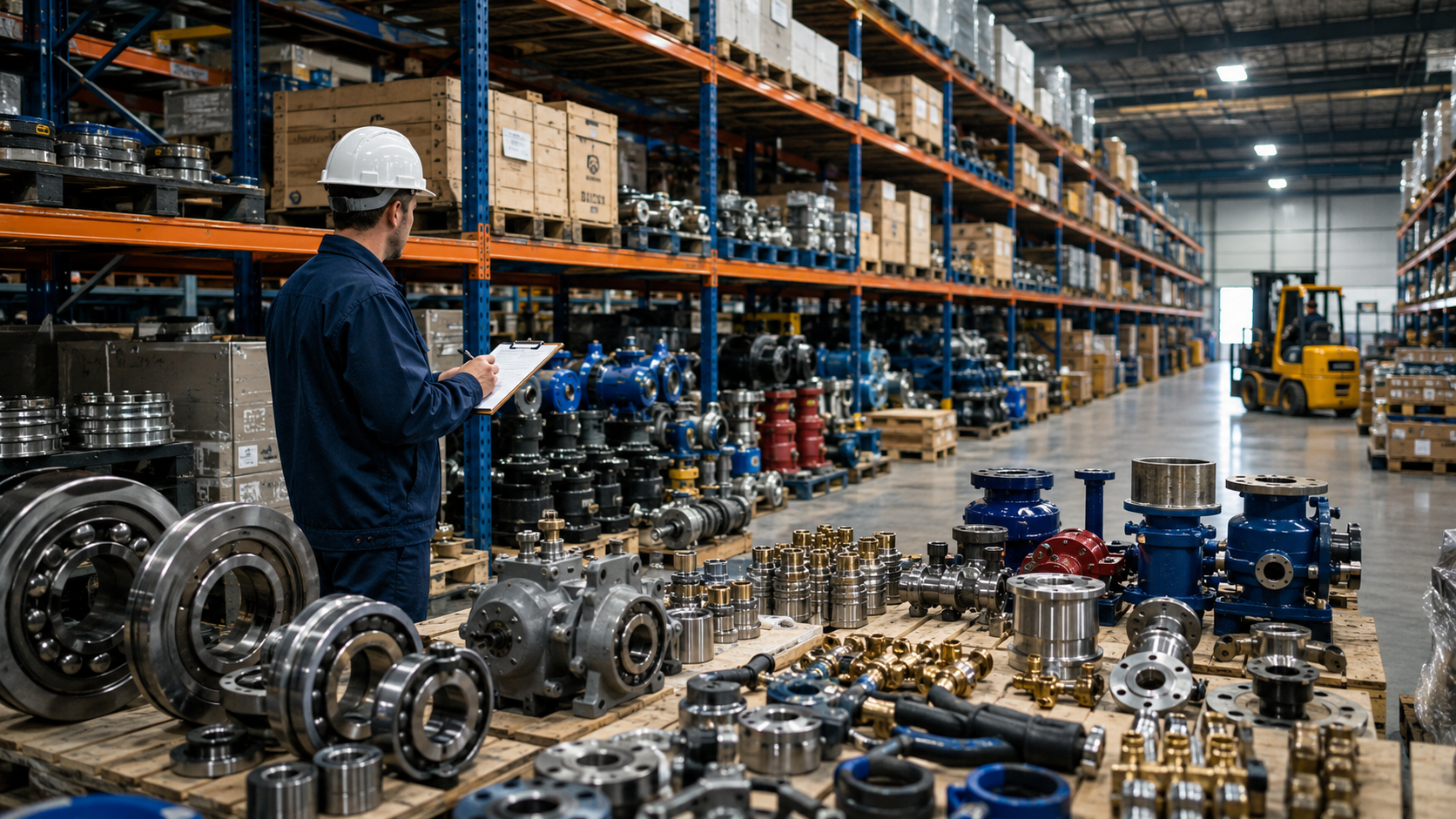
A wholesale industrial parts supplier helps companies source essential components, maintenance supplies, replacement parts, and production materials in bulk, usually at better pricing and with more consistent availability than buying through scattered retail channels. For manufacturers, maintenance teams, contractors, distributors, and procurement departments, choosing the right supplier can directly affect uptime, operating costs, safety, and supply chain reliability.
Industrial operations depend on parts that must arrive on time, meet technical specifications, and perform under demanding conditions. A missed delivery, poor-quality component, or wrong part number can stop production, delay repairs, or create unnecessary risk.
In this guide, you will learn what a wholesale industrial parts supplier does, how the supply process works, what benefits to expect, how to evaluate suppliers, common purchasing mistakes, and the signs that your sourcing strategy is working. More below, you will also find practical examples, a supplier evaluation checklist, and frequently asked questions to help you make better procurement decisions.
What Is a Wholesale Industrial Parts Supplier?
A wholesale industrial parts supplier is a company that sells industrial components, tools, equipment parts, and maintenance materials in bulk to businesses rather than individual consumers.
These suppliers serve industries such as:
- Manufacturing
- Construction
- Oil and gas
- Mining
- Food processing
- Automotive
- Aerospace
- Logistics
- Warehousing
- Energy
- Packaging
- Industrial maintenance
Unlike retail sellers, wholesale suppliers usually focus on business-to-business purchasing. They may offer volume discounts, recurring supply programs, technical support, product sourcing, and account-based pricing.
A reliable supplier does not simply sell parts. It helps companies keep operations running by connecting procurement teams with the right materials at the right time.
What Products Does a Wholesale Industrial Parts Supplier Usually Offer?
The exact catalog depends on the supplier, but many industrial parts distributors carry a broad range of maintenance, repair, and operations products.
Common product categories include:
- Bearings and bushings
- Belts, chains, and pulleys
- Fasteners, nuts, bolts, and washers
- Seals, gaskets, and O-rings
- Motors, drives, and power transmission parts
- Pneumatic and hydraulic components
- Valves, fittings, and hoses
- Electrical components and connectors
- Cutting tools and abrasives
- Safety supplies and PPE
- Industrial lubricants and chemicals
- Welding supplies
- Conveyor parts
- Filters and filtration products
- Machine replacement parts
- Packaging and material handling components
A strong wholesale industrial parts supplier may also help locate hard-to-find parts, discontinued components, equivalent replacements, or custom industrial supplies.
Why Businesses Use Wholesale Industrial Parts Suppliers
Companies use wholesale suppliers because industrial purchasing is not only about price. It is about continuity, accuracy, speed, and risk reduction.
When equipment fails, the cost of downtime can be much higher than the cost of the part itself. A supplier that can provide the correct component quickly becomes a strategic partner, not just a vendor.
Better Pricing for Bulk Orders
Wholesale purchasing usually allows companies to access lower unit costs because parts are purchased in larger quantities.
This is especially useful for high-consumption items such as:
- Fasteners
- Filters
- Belts
- Gloves
- Abrasives
- Seals
- Lubricants
- Electrical connectors
Even small savings per unit can become significant when the same products are purchased repeatedly across multiple departments or locations.
More Reliable Inventory Availability
Industrial buyers often need parts that cannot be substituted casually. A machine may require a specific bearing size, material grade, seal type, voltage rating, or pressure tolerance.
Wholesale suppliers often maintain larger inventories than retail sellers and may also have access to manufacturer networks, regional warehouses, or import channels.
This reduces the risk of stockouts and emergency purchases.
Streamlined Procurement
Working with too many vendors creates administrative complexity. Every purchase may require different quotes, approvals, payment terms, shipping arrangements, and invoice records.
A wholesale industrial parts supplier can simplify procurement by consolidating multiple product categories under one account.
That may help reduce:
- Purchase order volume
- Invoice processing time
- Vendor management workload
- Shipping coordination problems
- Pricing inconsistencies
- Internal purchasing delays
Technical Product Support
Industrial parts often require technical knowledge. The correct choice may depend on operating temperature, load rating, corrosion resistance, speed, torque, material compatibility, or safety standards.
A knowledgeable supplier can help buyers compare options and avoid expensive mistakes.
For example, choosing the wrong hose for a hydraulic system can lead to leaks, pressure failure, equipment damage, or safety hazards. In the section of errors below, you will see why technical validation is one of the most important steps in industrial sourcing.
Emergency Support and Faster Replacement
Maintenance teams often need urgent replacements when equipment breaks down. A dependable supplier may offer faster shipping, local pickup, emergency sourcing, or priority service for established business accounts.
For plants and facilities where downtime is costly, this can be a major advantage.
How a Wholesale Industrial Parts Supplier Works
The process can vary depending on the supplier, the product type, and the buyer’s purchasing system. However, most business-to-business industrial sourcing follows a similar structure.
Product Identification
The buyer identifies the part needed using technical details such as:
- Part number
- Manufacturer name
- Equipment model
- Material specification
- Dimensions
- Load rating
- Electrical rating
- Pressure rating
- Temperature range
- Application requirements
Accurate identification is critical. A part may look similar but fail if it does not match the operating conditions.
Request for Quote
The buyer sends a request for quote, often called an RFQ. This may include quantity, delivery location, required lead time, preferred brands, certifications, and packaging needs.
A supplier then responds with pricing, availability, delivery estimates, and possible alternatives.
Technical Confirmation
Before placing the order, the buyer should confirm that the quoted part matches the requirement.
This may involve:
- Checking data sheets
- Comparing dimensions
- Confirming material compatibility
- Reviewing certifications
- Asking for manufacturer documentation
- Validating equivalent replacements
Technical confirmation prevents the common problem of receiving parts that are similar but not suitable.
Purchase Order and Terms
Once the quote is accepted, the buyer issues a purchase order. Established wholesale accounts may have payment terms such as net 30 or net 60, depending on the business relationship.
The purchase order usually includes:
- Part description
- Quantity
- Unit price
- Delivery address
- Billing information
- Required delivery date
- Special instructions
- Tax or customs details, if applicable
Fulfillment and Delivery
The supplier ships the order from available stock or sources it from a manufacturer or distribution partner.
For recurring orders, some suppliers may offer scheduled deliveries, blanket purchase orders, inventory programs, or vendor-managed inventory.
Receiving and Quality Check
Once the parts arrive, the buyer should inspect the shipment.
Important checks include:
- Quantity received
- Part numbers
- Packaging condition
- Product condition
- Certificates or documentation
- Lot numbers, when needed
- Compatibility with the purchase order
A strong receiving process helps detect errors before parts are installed or distributed internally.
Types of Wholesale Industrial Parts Suppliers
Not all suppliers operate the same way. Understanding the differences can help you choose the right partner for your needs.
General Industrial Distributors
General distributors offer a wide range of industrial supplies across many categories. They are useful for companies that want to consolidate purchasing.
They may carry parts for maintenance, safety, electrical systems, mechanical systems, tools, and facility operations.
This type of supplier is convenient when your company needs many different items from one source.
Specialized Parts Suppliers
Specialized suppliers focus on one product category or technical area, such as hydraulics, bearings, automation, valves, filtration, or power transmission.
They are often better for complex applications where product knowledge matters more than catalog size.
For example, a facility with advanced pneumatic systems may benefit from a supplier that understands pressure ratings, air preparation, tubing, actuators, and control valves.
OEM Parts Suppliers
OEM means original equipment manufacturer. OEM suppliers provide parts made by the original manufacturer of the machine or system.
OEM parts are often preferred when:
- Warranty compliance matters
- Equipment is highly specialized
- Performance must match original design
- Safety or regulatory standards are strict
- Substitution risk is unacceptable
The disadvantage is that OEM parts may cost more or have longer lead times.
Aftermarket Industrial Parts Suppliers
Aftermarket suppliers sell replacement parts made by third-party manufacturers. These parts may be compatible with original equipment but not produced by the OEM.
Aftermarket parts can be a practical choice when:
- Cost reduction is important
- The application is not highly sensitive
- The replacement is well-tested
- The supplier can verify compatibility
- OEM parts are unavailable or delayed
However, buyers should be careful. A cheaper alternative is only valuable if it performs reliably.
Local Wholesale Suppliers
Local suppliers can be very useful for urgent needs, quick pickups, and relationship-based service.
They may not always have the largest catalog, but they often provide faster response and better knowledge of regional industrial needs.
For companies in Mexico, the United States, or cross-border operations, local and regional suppliers can also help reduce logistics delays.
Online Wholesale Industrial Suppliers
Online suppliers provide searchable catalogs, digital ordering, quote requests, and account management tools.
They are convenient for standardized purchases, but buyers should still verify product quality, return policies, shipping reliability, and technical support.
Online sourcing works best when part specifications are clear and the supplier has proven fulfillment accuracy.
Benefits of Choosing the Right Wholesale Industrial Parts Supplier
The right supplier can improve more than purchasing. It can support maintenance planning, production stability, compliance, and cost control.
Reduced Downtime
Industrial downtime can affect production schedules, labor utilization, customer commitments, and profitability.
A reliable wholesale industrial parts supplier helps reduce downtime by improving part availability and delivery speed.
This is especially important for critical spare parts such as bearings, belts, motors, sensors, valves, and control components.
Lower Total Cost of Ownership
The cheapest part is not always the lowest-cost option.
A low-quality component may fail early, require more replacements, cause equipment damage, or increase labor costs.
A good supplier helps buyers consider total cost of ownership, including:
- Purchase price
- Shipping cost
- Installation time
- Expected service life
- Failure risk
- Warranty
- Downtime impact
- Maintenance frequency
This broader view leads to smarter procurement decisions.
Better Standardization
When different departments buy from different vendors, companies may end up with inconsistent brands, sizes, specifications, and quality levels.
A wholesale supplier can help standardize parts across locations or equipment types.
Standardization may reduce:
- Inventory complexity
- Training needs
- Maintenance errors
- Duplicate stock
- Emergency purchases
- Compatibility problems
Improved Inventory Planning
Industrial suppliers can help companies identify which parts should be kept in stock and which can be ordered as needed.
For example, a plant may need to keep critical replacement parts on hand for high-risk equipment, while less urgent items can be purchased through scheduled orders.
Good inventory planning balances availability with cash flow.
Stronger Supplier Relationships
A long-term supplier relationship can lead to better service, faster response, improved pricing, and deeper understanding of your operation.
Over time, the supplier learns your preferred brands, equipment types, order patterns, and delivery requirements.
That knowledge can make purchasing smoother and more accurate.
How to Choose a Wholesale Industrial Parts Supplier
Choosing a supplier should involve more than comparing prices. A structured evaluation helps protect your operation from quality problems, delays, and hidden costs.
Check Product Range
Start by reviewing whether the supplier carries the categories your company regularly needs.
A broad catalog is useful, but relevance matters more. A supplier with thousands of products may still be a poor fit if they do not stock your critical components.
Ask:
- Do they carry your most-used parts?
- Do they support your industry?
- Do they offer preferred brands?
- Can they source hard-to-find parts?
- Do they provide equivalent replacements when needed?
Evaluate Technical Expertise
Industrial parts require more than order-taking. A supplier should understand product specifications and application requirements.
Look for evidence of technical knowledge, such as:
- Product specialists
- Engineering support
- Manufacturer partnerships
- Data sheets and documentation
- Application guidance
- Experience with your industry
This is especially important for mechanical, electrical, hydraulic, pneumatic, and automation components.
Review Lead Times
Lead time is one of the most important factors in industrial sourcing.
Ask about:
- Stock availability
- Standard shipping times
- Emergency delivery options
- Backorder handling
- Manufacturer lead times
- Cross-border shipping capabilities
- Order tracking
A good price loses value if the product arrives too late.
Confirm Quality Standards
Quality matters because industrial parts often operate under pressure, heat, friction, vibration, chemicals, or heavy loads.
Depending on the industry, you may need:
- Manufacturer certificates
- Material certificates
- Safety data sheets
- Traceability
- Compliance documentation
- Warranty information
- Testing records
Do not assume that every supplier offers the same quality controls.
Compare Pricing Structure
Wholesale pricing may depend on order volume, account type, contract terms, brand, and delivery requirements.
Instead of looking only at unit price, compare:
- Volume discounts
- Freight costs
- Minimum order quantities
- Payment terms
- Return fees
- Emergency order charges
- Contract pricing options
- Price stability for recurring items
A transparent pricing structure makes budgeting easier.
Assess Customer Service
Industrial purchasing often involves urgent questions, changes, and problem-solving.
Strong customer service includes:
- Fast response times
- Clear communication
- Accurate quotes
- Order updates
- Helpful issue resolution
- Easy returns process
- Dedicated account support
A supplier that is difficult to reach during normal orders may be even harder to work with during emergencies.
Review Return and Warranty Policies
Even with careful sourcing, mistakes can happen. Parts may arrive damaged, be ordered incorrectly, or fail early.
Before committing to a supplier, review:
- Return windows
- Restocking fees
- Warranty process
- Documentation requirements
- Damaged shipment claims
- Policy for special-order items
- Responsibility for incorrect substitutions
Clear policies reduce disputes and delays.
Consider Location and Logistics
Location can affect shipping time, freight cost, customs handling, and emergency availability.
For companies operating between Mexico and the United States, logistics capabilities may be especially important.
Ask whether the supplier can support:
- Domestic delivery
- Cross-border shipments
- Multiple warehouse locations
- Local pickup
- Consolidated shipments
- Scheduled deliveries
- Proper packaging for industrial goods
A supplier with strong logistics can reduce purchasing friction.
Practical Examples of Industrial Parts Sourcing
Seeing how supplier selection works in real scenarios can make the process easier to apply.
Example: Manufacturing Plant Maintenance
A production line uses conveyor belts, bearings, sensors, and gear motors. The maintenance team frequently buys replacement parts from several vendors.
The problem is that orders are inconsistent. Some parts arrive late, others are incompatible, and invoices are difficult to track.
A wholesale industrial parts supplier can help by consolidating recurring purchases, identifying critical spare parts, and setting up reorder points for high-use items.
The result is fewer emergency purchases and better control of maintenance inventory.
Example: Construction Company
A construction company needs fasteners, abrasives, safety supplies, hydraulic hoses, and equipment replacement parts across multiple job sites.
Buying from retail stores causes inconsistent pricing and lost time.
A wholesale supplier can offer account pricing, bulk delivery, standardized products, and job-site shipment options.
This helps the company reduce downtime and keep crews supplied.
Example: Food Processing Facility
A food processing facility needs parts that meet hygiene, safety, and material compatibility requirements.
The wrong lubricant, gasket, or fitting could create contamination risk or equipment failure.
A specialized industrial supplier can help identify food-grade materials, stainless steel components, washdown-rated equipment, and proper documentation.
In this case, technical accuracy is more important than the lowest price.
Example: Warehouse and Logistics Operation
A warehouse depends on conveyors, dock equipment, forklifts, pallet handling systems, and packaging tools.
Frequent wear parts include rollers, belts, bearings, sensors, wheels, and safety supplies.
A wholesale supplier can help create a recurring supply plan for predictable maintenance needs while keeping emergency replacement options available.
Common Mistakes When Buying Industrial Parts Wholesale
Industrial procurement mistakes can be expensive. Many problems come from rushing, incomplete specifications, or focusing only on price.
Choosing Only by Lowest Price
Low prices can be attractive, but they may hide quality problems, short service life, poor documentation, or unreliable delivery.
A better approach is to compare total value.
Consider:
- Product quality
- Supplier reliability
- Lead time
- Warranty
- Technical support
- Shipping cost
- Failure risk
A cheap part that fails quickly may become the most expensive option.
Ordering Without Complete Specifications
Many industrial components have small differences that matter.
For example, two seals may have the same size but different materials. One may resist oil, while another may fail when exposed to the same fluid.
Always confirm technical details before ordering.
Ignoring Lead Time Risk
Some companies wait until a part fails before ordering a replacement. This reactive approach creates emergency costs and downtime.
Critical parts should be identified in advance, especially if they have long lead times or limited availability.
Accepting Substitutes Without Validation
Equivalent parts can be useful, but they must be validated.
Never assume that a replacement is acceptable just because it looks similar or fits physically.
Check ratings, materials, tolerances, manufacturer documentation, and application requirements.
Not Tracking Supplier Performance
Many companies continue using suppliers without measuring results.
Track supplier performance using simple metrics such as:
- On-time delivery
- Order accuracy
- Return rate
- Quote response time
- Product failure issues
- Backorder frequency
- Pricing consistency
This data helps identify whether the supplier is helping or hurting operations.
Overbuying Slow-Moving Parts
Bulk purchasing can reduce unit cost, but overbuying ties up cash and storage space.
Avoid buying large quantities unless the part has predictable usage, long shelf life, or critical importance.
The goal is not to fill shelves. The goal is to keep the right parts available.
Best Practices for Working With a Wholesale Industrial Parts Supplier
A strong supplier relationship works best when the buyer also has a clear internal process.
Create a Critical Parts List
Identify the parts that would cause major downtime if unavailable.
This list may include:
- Motors
- Belts
- Bearings
- Sensors
- Valves
- Filters
- Control components
- Hydraulic hoses
- Safety-critical items
For each part, record the part number, equipment location, preferred brand, approved alternatives, and minimum stock level.
Standardize Part Numbers
Part number confusion is one of the most common causes of ordering mistakes.
Maintain a central database with:
- Internal part codes
- Manufacturer part numbers
- Supplier part numbers
- Equipment references
- Technical specifications
- Photos, when useful
- Approved substitutes
This makes procurement faster and more accurate.
Use Approved Supplier Lists
Not every supplier should be used for every purchase.
Create an approved supplier list based on product categories, quality standards, pricing, and service history.
This helps prevent random purchasing from unverified sources.
Negotiate Based on Recurring Demand
Suppliers are more likely to offer better pricing and service when they understand your recurring needs.
Instead of negotiating one order at a time, share projected demand for common items.
This may support:
- Volume pricing
- Stock reservations
- Scheduled deliveries
- Contract pricing
- Better payment terms
- Faster quote response
Review Supplier Performance Regularly
Supplier evaluation should not happen only when something goes wrong.
Review performance periodically using practical indicators.
Ask:
- Are orders arriving on time?
- Are quotes accurate?
- Are substitutions properly explained?
- Are prices stable?
- Are quality issues increasing?
- Is the supplier responsive during urgent situations?
This keeps the relationship accountable.
Build a Backup Supplier Strategy
Even a good supplier may face shortages, logistics delays, or manufacturer backorders.
For critical parts, it is wise to have backup sources.
A backup strategy may include:
- Alternative brands
- Secondary suppliers
- Local emergency vendors
- Approved equivalent parts
- Minimum safety stock
- Manufacturer direct contacts
The goal is resilience, not vendor confusion.
Signs You Have Chosen the Right Wholesale Industrial Parts Supplier
A good supplier makes operations feel more predictable. You should notice fewer surprises, fewer emergency purchases, and better internal confidence.
Orders Are Accurate
The parts delivered match the quote, purchase order, and technical requirements.
There are fewer returns, fewer wrong items, and fewer compatibility issues.
Lead Times Are Reliable
The supplier gives realistic delivery estimates and communicates clearly when delays occur.
Reliable lead times help maintenance and production teams plan properly.
Technical Questions Are Answered Clearly
A dependable supplier can explain differences between products, confirm specifications, and provide documentation when needed.
This is especially important for safety-sensitive or performance-critical parts.
Pricing Is Transparent
There are no constant surprises in invoices.
The Supplier Helps Prevent Problems
A strong supplier does not only react to orders. It may suggest better alternatives, identify recurring issues, recommend stock levels, or alert you to availability risks.
That type of support creates long-term value.
Signs Your Industrial Parts Supplier May Be a Poor Fit
Not every supplier relationship should continue. Some warning signs indicate that it may be time to look for better options.
Frequent Wrong Parts
If incorrect items arrive often, the supplier may have poor internal controls, weak technical knowledge, or inadequate order verification.
Unclear Communication
Slow responses, vague lead times, and incomplete quotes can create operational risk.
Industrial buyers need precise information.
Poor Documentation
If your supplier cannot provide data sheets, certificates, warranty details, or product origin information when required, that may be a serious concern.
Unstable Pricing
Some price changes are normal, but constant unexplained increases can make planning difficult.
A professional supplier should be able to explain pricing changes clearly.
Weak Support During Urgent Needs
A supplier’s real value often becomes clear during emergencies.
If they disappear when downtime is on the line, they may not be the right partner for critical operations.
Wholesale Industrial Parts Supplier vs. Retail Industrial Store
A retail industrial store may be convenient for occasional purchases, but wholesale suppliers are usually better for recurring business needs.
Wholesale Supplier
A wholesale supplier is typically better when you need:
- Bulk purchasing
- Account pricing
- Recurring orders
- Technical support
- Business credit terms
- Supplier consolidation
- Larger inventory access
- Custom sourcing
Retail Store
A retail store may be useful when you need:
- Small quantities
- Immediate local availability
- Basic tools or supplies
- One-time purchases
- Simple replacement items
Both can be useful, but they serve different purposes. For ongoing industrial operations, a wholesale industrial parts supplier usually provides better long-term value.
Wholesale Industrial Parts Supplier vs. Manufacturer Direct Purchasing
Some companies wonder whether they should buy directly from manufacturers instead of using suppliers.
The best answer depends on volume, product complexity, lead time, and purchasing strategy.
When a Wholesale Supplier Is Better
A wholesale supplier may be better when you need:
- Multiple product categories
- Smaller bulk quantities
- Faster availability
- Vendor consolidation
- Technical comparison between brands
- Local service
- Easier ordering
- Emergency sourcing
When Manufacturer Direct May Be Better
Buying direct from the manufacturer may be better when:
- Volumes are very high
- Products are highly specialized
- Custom engineering is needed
- OEM warranty requirements apply
- Long-term production contracts exist
Many companies use both. They buy some strategic parts directly from manufacturers and source maintenance or replacement items through wholesale suppliers.
When Should a Company Use a Wholesale Industrial Parts Supplier?
A wholesale supplier is a strong fit when industrial parts purchasing is frequent, recurring, technical, or operationally important.
It is especially useful when your company:
- Buys industrial parts in volume
- Needs consistent pricing
- Wants to reduce vendor complexity
- Has recurring maintenance needs
- Operates production equipment
- Manages multiple locations
- Needs fast replacement parts
- Requires technical support
- Wants to improve inventory planning
For small businesses, wholesale purchasing can also be useful once order volume becomes predictable.
When Should You Avoid a Wholesale Industrial Parts Supplier?
There are situations where wholesale purchasing may not be necessary.
You may not need a wholesale supplier if:
- You only buy occasional basic items
- You do not need business account terms
- Your order quantities are very small
- You require only consumer-grade products
- You cannot store bulk inventory
- You do not have recurring industrial needs
However, even small operations may benefit from a wholesale account if they frequently buy the same parts or want better sourcing reliability.
How to Prepare Before Contacting a Supplier
The better your information, the better your supplier can help.
Before requesting a quote, prepare:
- Part numbers
- Quantities
- Required delivery dates
- Equipment model information
- Preferred brands
- Technical specifications
- Photos, if part identification is difficult
- Application details
- Required certifications
- Shipping address
- Billing information
For complex parts, include operating conditions such as temperature, pressure, load, speed, voltage, chemical exposure, or environmental factors.
This helps the supplier recommend the correct product.
Questions to Ask a Wholesale Industrial Parts Supplier
Before opening an account or placing a large order, ask practical questions.
Useful questions include:
- What product categories do you specialize in?
- Do you offer volume discounts?
- Can you source hard-to-find parts?
- What brands do you carry?
- Do you provide technical support?
- What are your standard lead times?
- Do you offer emergency delivery?
- What are your payment terms?
- What is your return policy?
- Can you provide documentation or certificates?
- Do you support multiple delivery locations?
- Can you recommend approved equivalents?
- Do you offer inventory programs?
The answers will reveal whether the supplier is simply selling products or truly supporting industrial procurement.
Mini Checklist for Choosing a Wholesale Industrial Parts Supplier
Use this quick checklist when comparing supplier options.
- The supplier carries your most important product categories.
- Pricing is clear and competitive.
- Lead times are realistic and consistent.
- Technical support is available.
- Product documentation can be provided.
- Return and warranty policies are clear.
- Customer service is responsive.
- Order accuracy is strong.
- Emergency sourcing options exist.
- The supplier understands your industry.
- Logistics fit your locations.
- Approved equivalent parts can be validated.
- Account terms support your purchasing process.
- Supplier performance can be measured.
A supplier does not need to be perfect in every area, but it should be strong in the areas that matter most to your operation.
How to Build a Long-Term Supplier Relationship
A strong supplier relationship is built through communication, consistency, and shared expectations.
Start by providing clear specifications and realistic demand information. When possible, share forecasts for recurring parts so the supplier can plan inventory or negotiate better pricing.
It also helps to define service expectations early. For example, clarify quote response times, preferred communication channels, delivery requirements, documentation needs, and emergency procedures.
Over time, the supplier should become familiar with your equipment, preferred brands, internal approval process, and critical parts. This knowledge improves speed and accuracy.
A good relationship does not mean accepting poor performance. It means creating a structured partnership where both sides understand what success looks like.
How Industrial Parts Suppliers Support Maintenance Teams
Maintenance teams depend heavily on parts availability. The right supplier can make preventive maintenance more effective and emergency repairs less stressful.
A supplier can support maintenance by helping with:
- Critical spare parts planning
- Preventive maintenance kits
- Replacement schedules
- Equivalent part identification
- Emergency sourcing
- Technical documentation
- Inventory replenishment
- Wear-part standardization
This is especially valuable in facilities where equipment downtime affects production, safety, or customer delivery.
How Industrial Parts Suppliers Support Procurement Teams
Procurement teams focus on cost control, vendor management, compliance, and purchasing efficiency.
A wholesale industrial parts supplier can help procurement teams by reducing vendor fragmentation and simplifying purchasing workflows.
Benefits for procurement may include:
- Fewer vendors to manage
- Consolidated invoices
- Better pricing visibility
- Contract pricing opportunities
- More accurate purchasing records
- Improved supplier accountability
- Easier spend analysis
- Stronger negotiation leverage
When procurement and maintenance teams collaborate with the same supplier, companies often make better sourcing decisions.
How to Measure Supplier Performance
Measuring supplier performance helps determine whether the relationship is delivering value.
Useful supplier performance indicators include:
- On-time delivery rate
- Order accuracy rate
- Quote response time
- Product defect rate
- Return frequency
- Backorder frequency
- Emergency order success
- Price consistency
- Documentation accuracy
- Customer service responsiveness
You do not need a complicated system to start. Even a simple monthly review of late orders, wrong parts, and urgent issues can reveal patterns.
Wholesale Industrial Parts and Inventory Management
Inventory management is one of the most important areas where suppliers can add value.
Too little inventory creates downtime risk. Too much inventory ties up money and storage space.
A balanced approach includes:
- Classifying critical parts
- Setting minimum and maximum stock levels
- Tracking consumption patterns
- Identifying slow-moving items
- Reviewing obsolete parts
- Standardizing common components
- Using reorder points
- Keeping approved alternatives documented
A supplier can help by providing usage reports, recurring order options, and recommendations for frequently replaced parts.
Quality Considerations for Industrial Parts
Industrial parts often operate in demanding environments. Quality should be evaluated carefully.
Important quality factors include:
- Material grade
- Dimensional accuracy
- Load capacity
- Temperature resistance
- Chemical compatibility
- Pressure rating
- Electrical rating
- Corrosion resistance
- Manufacturer reputation
- Warranty terms
- Compliance documentation
For critical applications, avoid unknown brands unless they have been properly evaluated.
The Role of Documentation in Industrial Parts Purchasing
Documentation helps confirm that parts meet required specifications.
Depending on the product and industry, documentation may include:
- Technical data sheets
- Safety data sheets
- Certificates of compliance
- Material test reports
- Installation instructions
- Warranty documents
- Manufacturer manuals
- Lot traceability records
Documentation is especially important in regulated industries, safety-sensitive operations, and quality-controlled manufacturing environments.
How to Reduce Risk When Buying Industrial Parts Wholesale
Industrial sourcing always involves some risk, but good processes reduce exposure.
To reduce risk:
- Verify part numbers before ordering.
- Use approved suppliers.
- Confirm technical specifications.
- Ask for documentation when needed.
- Avoid unvalidated substitutes.
- Keep critical spare parts in stock.
- Track supplier performance.
- Inspect shipments upon arrival.
- Document recurring issues.
- Review inventory regularly.
Risk reduction is not about slowing procurement. It is about preventing avoidable mistakes that cause downtime or safety problems.
FAQ
What does a wholesale industrial parts supplier do?
A wholesale industrial parts supplier sells industrial components, maintenance supplies, replacement parts, and related products in bulk to businesses. Many also provide sourcing support, technical assistance, delivery options, and account-based pricing.
How do I choose the best industrial parts supplier?
Choose a supplier by comparing product range, technical knowledge, lead times, pricing transparency, quality standards, documentation, logistics, customer service, and return policies. The best option is the supplier that supports your operation reliably, not just the one with the lowest price.
Is a wholesale industrial parts supplier cheaper than retail?
In many cases, yes. Wholesale suppliers often offer better pricing for bulk or recurring orders. However, the real savings usually come from lower downtime, better order accuracy, fewer emergency purchases, and improved procurement efficiency.
Can wholesale suppliers provide hard-to-find industrial parts?
Many wholesale suppliers can source hard-to-find, obsolete, or specialized parts through manufacturer networks and distribution partners. The success depends on the supplier’s industry connections and technical sourcing capabilities.
Should I use OEM or aftermarket industrial parts?
Use OEM parts when warranty, exact fit, safety, or equipment performance is critical. Aftermarket parts may be suitable when they are properly validated, cost-effective, and compatible with the application.
Conclusion
A wholesale industrial parts supplier can become a valuable partner for companies that depend on reliable equipment, consistent maintenance, and efficient procurement. The right supplier helps reduce downtime, improve inventory planning, control costs, and ensure that parts meet the correct technical requirements.
The key is to evaluate suppliers carefully. Price matters, but it should never be the only factor. Product quality, lead time, technical support, documentation, logistics, and customer service all influence the real value of the relationship.
For industrial operations, the best supplier is one that understands your equipment, responds quickly, communicates clearly, and helps prevent purchasing mistakes before they become operational problems. By using the checklist and best practices in this guide, your company can build a stronger, safer, and more efficient sourcing process.